
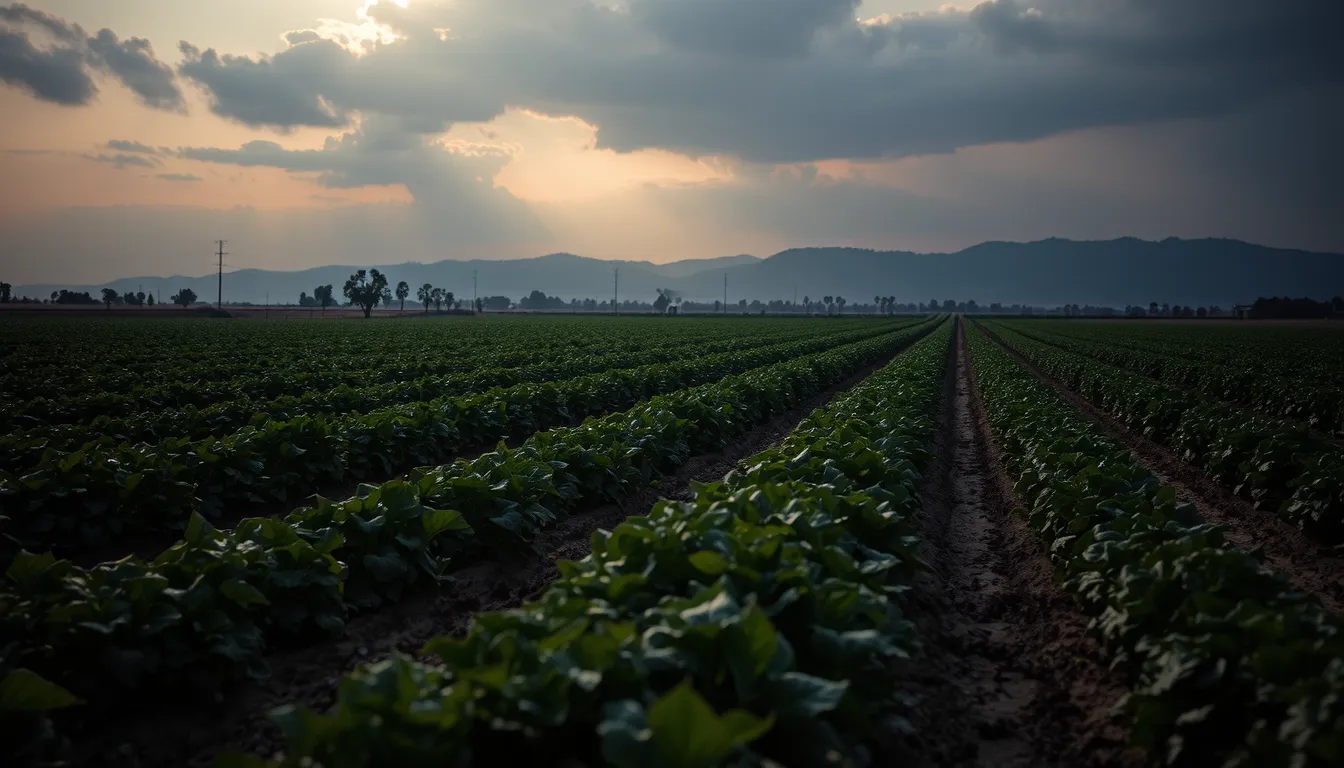
Local Farms Battle Extreme Heat: How Our Region’s Crops Are Suffering
When Apples Cook in the Heat: A Crisis at Amsbury Farm
For generations, farms across the Maidstone area have produced some of England’s finest apples. But this summer, growers like those at Amsbury Farm near Maidstone are facing an unprecedented challenge. When temperatures soar above 30 degrees without wind relief, the juice inside Bramley and Cox apples literally begins to boil, rendering the entire crop worthless.

To combat this, local farmers have resorted to spraying their trees with a protective clay coating—essentially applying sunscreen to thousands of apples across 200 acres. It’s a labour-intensive workaround that underscores just how stressed these traditional English fruit varieties have become.
But spraying isn’t enough. The relentless heat has forced farmers to thin their trees dramatically, sacrificing yield and fruit size just to keep the plants alive. What should be peak production season has become a survival exercise. For consumers shopping at local Maidstone markets and farm shops, this means fewer locally-grown apples on shelves and potentially higher prices for what does make it to market. The broader question looms: how much longer can our region’s heritage fruit farming remain viable under these conditions?
Cattle Farmers Face Empty Pastures: The Brockham Problem
In Brockham, Surrey, cattle farmer Nellie Budd manages 247 cows on land that has seen virtually no rain for 47 consecutive days. This isn’t simply an inconvenience—it threatens the viability of her family farm and the local beef supply chain.
Normally, grass bounces back quickly after cutting for hay or silage, allowing continuous grazing. This year, without moisture in the soil, nothing recovers. Budd has already started feeding her cattle winter hay reserves during summer—a costly and unsustainable solution that depletes resources meant for the colder months ahead.
The consequences ripple through the community. Underfed cattle means smaller carcasses, lower market value, and reduced income for a farming family that cannot afford to simply reduce herd numbers. Local butchers and restaurants sourcing from Brockham farms face supply uncertainty. Meanwhile, residents concerned about supporting local agriculture watch helplessly as one of Surrey’s established farming operations struggles against forces beyond any farmer’s control.
Farmers are trying soil overlays and moisture-retention techniques, but without rainfall, these measures offer only limited relief. The message is clear: without significant weather pattern changes, this family business—and others like it—faces genuine jeopardy.
West Horsley’s Grain Harvest Collapses by 40%: What It Means for Local Food
At Woolgars Farm in West Horsley, arable farmer Peter Knight oversees approximately 2,000 acres of grain production. His harvest report this summer is bleak: yields are down 30-40% from normal expectations, following a spring barley crop that received almost no rain since March planting.
Unlike fruit and cattle farming, arable operations cannot simply adjust tactics mid-season. Spring barley flowers in early June, and when heat stress strikes at that critical moment, crop yield becomes predetermined. Knight explains that throughout the entire grain-filling period, the farm received essentially zero rainfall—a pattern that has now occurred in three of the last five years.
Irrigation isn’t feasible for operations at this scale; the infrastructure costs and water availability make it impractical. Farmers are experimenting with earlier spring sowing and reduced cultivation to preserve soil moisture, but these measures merely slow the damage rather than prevent it.
The implications extend beyond West Horsley to national food security. If yield losses continue at these rates, Britain will inevitably import more grain, potentially affecting local food prices and supply chains. For residents, this means rising bread, beer, and cereal costs. The convergence of crisis across fruit, livestock, and grain production reveals a fundamental vulnerability in our regional agricultural system—one that adapts poorly to prolonged heat and drought.
How Local Communities Can Respond and What to Watch
The farming crisis unfolding across Maidstone, Surrey, and West Horsley demands community awareness and action. Here’s what local residents should know and do:
**Immediate steps:** Support local farmers by purchasing produce at farm shops, farmers’ markets, and through community-supported agriculture schemes. Every local purchase strengthens farms’ ability to weather difficult seasons. Expect higher prices and reduced availability—this reflects genuine scarcity, not greed.
**Advocacy matters:** Contact local council representatives and MP offices about agricultural resilience funding. Ask whether planning permissions for rural development consider climate impacts and food security. Interestingly, as some farms struggle, others are exploring diversification—everything from agritourism to on-farm accommodation projects, similar to how urban homeowners invest in loft conversion or loft refurbishment to add value during economic uncertainty.
**Watch these developments:** Monitor rainfall patterns over autumn and winter. Will water tables recover? Are water companies implementing restrictions? Will government introduce emergency agricultural support? How will food prices respond through winter?
**Long-term thinking:** Support research into climate-resilient crop varieties. Encourage local schools to teach sustainable farming. Consider whether your own home could support small-scale growing.
These farmers aren’t asking for sympathy—they’re asking for recognition that feeding a community requires investment, support, and genuine commitment to local food systems.
Source: Farmers ‘suncream’ apples to stop them boiling in the heatwaves